
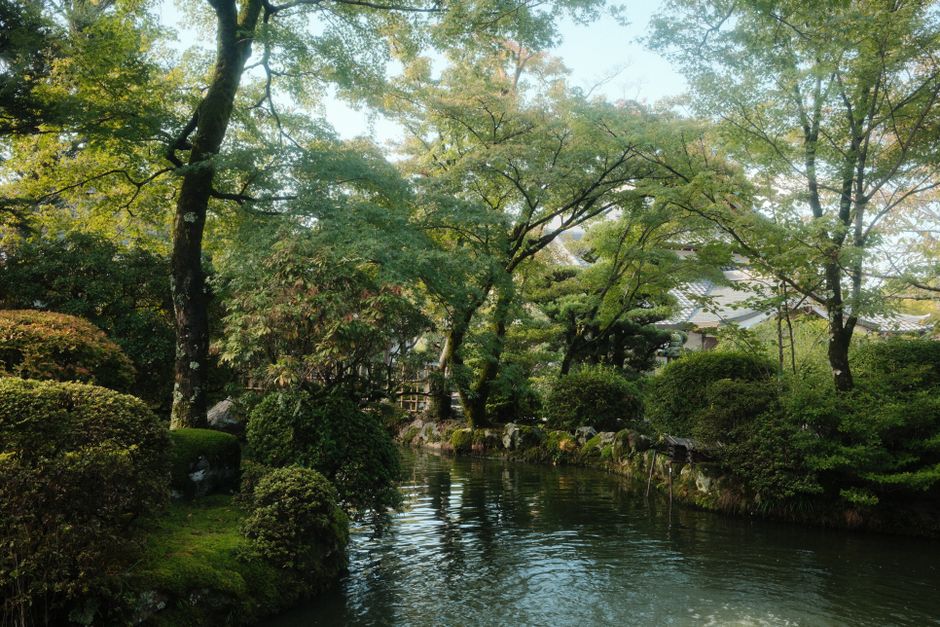
You arrive in Kyoto just after breakfast, umbrella dripping onto the entrance mat, with wet shoes and a temple map that is already starting to curl. The rain has emptied some streets, but it has also turned every stone path slick. You want to see moss glowing under cedar trees, not rush from one crowded landmark to another while worrying about where to stand, what to touch, or whether photography is allowed.
Kyoto in June rewards a slower plan. The rainy season, called tsuyu, usually brings warm temperatures, high humidity, sudden showers, and longer damp spells. The exact pattern changes each year, so a clear morning can become a wet afternoon. That weather can make moss gardens look richer, but it also exposes weak planning. The best visit combines flexible timing, respectful temple behavior, and a route with indoor places nearby.
What does Kyoto rain change for a temple visit?
Rain improves the gardens but reduces your margin for error. Moss looks most vivid when the stones, tree trunks, and paths hold moisture. Rain also softens the light, which helps green textures stand out in photographs. The trade-off is physical: wooden steps become slippery, umbrellas block narrow paths, and a delayed train or slow walk can make a tightly packed itinerary fall apart.
Use the weather as a timing tool
Do not treat rain as a reason to cancel every outdoor visit. Treat it as a reason to change the order. Place a moss garden or a temple with open-air paths in the first dry window of the day, then move toward an indoor museum, covered market, tea house, or large temple hall when the shower becomes heavy. A short shower often passes quickly, while a long wet afternoon can leave clothing and footwear uncomfortable for hours.
Build a route with fewer transfers
Kyoto looks compact on a map, but temple districts sit on different hills and rail lines. Wet-weather travel makes a route with three neighbourhoods less pleasant than a focused route with two nearby stops. In eastern Kyoto, for example, you can pair a temple visit around Higashiyama with a covered shopping street or a quiet café. In western Kyoto, a moss garden near Arashiyama works better when you leave time for the surrounding lanes instead of adding a distant shrine across the city.
| Condition | Best plan | Main risk |
|---|---|---|
| Light rain or mist | Visit moss gardens and stone paths early | Slippery steps and crowded covered viewpoints |
| Heavy rain for one to two hours | Choose a temple hall, museum, market, or tea stop | Arriving soaked before removing shoes |
| Rain with strong wind | Stay near rail stations and indoor attractions | Broken umbrellas and delayed transport |
| Clear break after rain | Use the short window for garden photography | Everyone has the same idea |
The strongest June strategy is simple: schedule one garden as the purpose of the day, then keep the rest flexible. You will see more and feel less rushed.
How should visitors behave inside Kyoto temples?

Temple etiquette becomes easier when you think about the place as an active religious site rather than a museum set. Visitors may come to pray, maintain family memorials, or practice quietly. Your job is not to perform the perfect ritual. Your job is to avoid interrupting those uses and to follow the signs at each temple.
The practical sequence at the entrance
- Pause before entering. Read the signs beside the gate, ticket counter, or garden entrance. They may give rules about shoes, photography, food, umbrellas, or reservations.
- Remove shoes only where the temple asks you to remove them. Place them neatly with the toes pointing toward the exit, or use the provided storage shelves. Keep socks clean and dry because many wooden interiors require visitors to walk in socks.
- Silence your phone before entering a hall or garden. A vibration can sound surprisingly loud in a quiet wooden building.
- Walk on marked paths. Moss often looks soft, but stepping on it damages the surface and compacts the soil beneath it. Stay behind ropes and do not lean over barriers for a better photograph.
- Speak in a low voice. Give worshippers space near altars, memorial areas, and incense burners. Do not turn a prayer area into a photo queue.
- Follow every no-photography sign, even if other visitors ignore it. Some restrictions protect paintings, religious objects, privacy, or the movement of people through a narrow hall.
- Fold your umbrella before entering. Place it in a rack or carry it pointed down. Do not leave a wet umbrella across a doorway where someone could trip.
- Keep food and drinks outside unless the temple clearly provides a place for them. Water is useful on a humid day, but a sealed bottle should stay in your bag during the indoor visit.
What to do when the rules feel unclear
Look for staff instructions before copying another visitor. A temple may allow photography in one garden and prohibit it in a nearby hall. Some places welcome quiet observation but restrict tripods, selfie sticks, or large groups. If you need help, ask a short question at the entrance rather than entering first and correcting yourself later.
Dress for movement, not ceremony. Clean, modest clothing works well, but you do not need formal wear for most temple visits. Avoid clothing that exposes a lot of skin when you plan to sit on a temple floor, and choose trousers or a skirt that allows you to climb steps safely. The most respectful visitor is the one who stays alert, follows local signs, and makes room for other people.
Which Kyoto moss gardens work best in June?
For a first June visit, choose Saiho-ji if you can secure the required reservation; choose Gio-ji when you want a simpler, quieter moss experience. Saiho-ji, often called Kokedera, is the famous specialist: its garden contains a deep carpet of moss, and the visit feels deliberately controlled. That control matters because the garden needs protection and because timed entry keeps the space from becoming a constant stream of visitors. Gio-ji is smaller and more intimate. Its moss-covered ground, bamboo, and shaded paths create a strong rainy-season atmosphere, but the garden does not offer the same scale as Saiho-ji.
Saiho-ji: the planned visit
Saiho-ji suits travellers willing to organise ahead. Check the official reservation process before leaving home because entry rules, application methods, and available dates can change. Leave extra time for transport and the walk from the nearest stop. A reservation does not make the visit casual; you still need to arrive prepared, follow instructions, and allow time for the required activities or temple procedures listed by the temple.
The garden looks best when you slow down. Avoid treating the moss as a backdrop for a rapid set of portraits. Look at the changes in texture: thick cushions beside exposed roots, bright green patches near wet stones, and darker areas under dense shade. Rain may make your camera work harder, but the softer light often produces better garden images than direct midday sun.
Gio-ji, Tofuku-ji, and smaller alternatives
Gio-ji works well on a day when you want a compact garden visit near other Arashiyama sights. Go early, especially during a break in the rain. The paths can feel narrow, and a small space fills quickly when visitors stop for photographs. Tofuku-ji offers a different experience: it is known for major temple buildings, bridges, and several gardens, so it gives you more architectural variety when the moss alone does not justify a long journey.
Smaller subtemples and gardens around Kyoto can offer a calmer visit, but their opening days and photography rules vary. Do not assume that a garden listed in an old guidebook operates on the same schedule in June 2026. Check the temple’s own information close to your visit. If a garden closes because of weather, maintenance, or a private religious event, that is not a failure of the trip. It is a reason to keep one nearby backup.
