
I have a hard drive with 14,000 travel photos and exactly zero of them are on my walls. That changed when I stopped treating framing like a decorating problem and started treating it like a souvenir problem. Here’s what actually worked.
The Gallery Wall Is a Commitment. Do This Instead.
Every travel blogger tells you to build a gallery wall. They show you a perfect staircase with 24 matching frames and say it’s easy. It’s not. You need a level, a drill, wall anchors, and the patience to measure twice. Most people quit halfway through and end up with a pile of frames in a closet.
Start with a shelf gallery. You install one floating shelf—maybe two—and lean frames against the wall. No measuring. No nail holes for every single frame. You can swap photos in 30 seconds when you get back from a new trip. I use the IKEA MOSSLANDA picture ledge, which costs about $15 and holds 8-10 frames depending on size.
This is not a compromise. It’s the better system. When you travel 3 times a year, a fixed gallery wall is outdated by November. A shelf gallery updates as fast as your camera roll.
Frame Sizes That Actually Work Together
Don’t buy a random mix. Stick to three sizes: 4×6, 5×7, and 8×10. The 4×6 prints cost pennies at any drugstore. The 8×10 is for your one hero shot from each trip. Anything bigger than 8×10 and you’re spending $30+ on custom framing for a photo you’ll probably replace next year.
The IKEA RIBBA Trick
The IKEA RIBBA frame in white or black is $8 and comes with a mat. The mat is the key. A white mat around a 4×6 print makes it look like a gallery piece instead of a snapshot. Buy 5 of the same frame. Uniformity is what makes it look intentional, not the size of the photos.
Digital Frames: The Only One Worth Buying
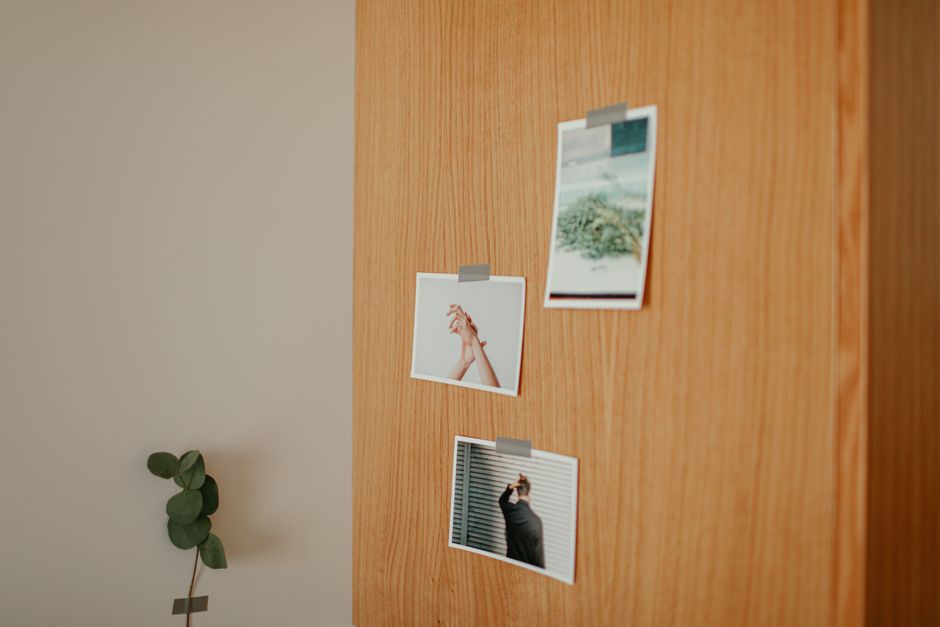
I used to think digital photo frames were for grandparents who don’t have smartphones. I was wrong. The Aura Mason frame ($199) changed how I display travel photos. Here’s why: it has an app that connects to your phone, unlimited cloud storage, and a screen that actually looks like a printed photo—not a glowing tablet on your wall.
The cheaper digital frames are garbage. The Pix-Star and generic Amazon frames have washed-out screens and clunky interfaces. If you’re going to spend money on a digital frame, spend it on the Aura. If you’re not going to spend $199, don’t buy a digital frame at all. Print your photos instead.
The Aura Mason is 9 inches, shows photos in a 4:3 ratio, and automatically adjusts brightness based on room light. You can create albums by trip and set it to shuffle. When I come home from a trip, I upload 20 photos and they’re on my desk frame before I unpack my bag.
| Option | Price | Best For | Drawback |
|---|---|---|---|
| IKEA MOSSLANDA shelf + RIBBA frames | $45 total | Rotating gallery, renters | Limited to one wall |
| Aura Mason digital frame | $199 | High volume, frequent travelers | One frame, one location |
| Umbra Exhibit 9-opening collage frame | $60 | Single trip story, gift | Fixed layout, no rotation |
| Magnetic photo rope (DIY) | $20 | Dorm rooms, temporary spaces | Photos curl, looks messy |
If you take more than 2 trips a year, the Aura pays for itself in printing costs alone. A 4×6 print at CVS is $0.40. If you print 50 photos a year, that’s $20. Ten years, $200. And those prints end up in a shoebox. The digital frame actually shows the photos.
Stop Framing Every Photo. Frame the Story.
Here’s the mistake I made for years: I framed the postcard shots. The Eiffel Tower at sunset. The Colosseum from the perfect angle. The problem is that those photos look like stock images. They don’t mean anything to anyone but you, and they don’t even mean that much to you after a while.
The photos that work in frames are the ones with texture and story. The blurry photo of your friend laughing at a cafe in Lisbon. The sign you saw on a hiking trail in Peru. The receipt from a restaurant in Tokyo. These are the photos people ask about when they visit your house. Nobody asks about the Eiffel Tower.
My rule now: if a photo could be on a postcard, it doesn’t go in a frame. If a photo needs a 30-second explanation, that’s the one to print.
Print the Imperfect Shots
That slightly overexposed photo of the market in Marrakech? The one where the colors bleed together? Print it at 4×6. The small size hides the technical flaws and shows the energy. You’re not entering a photo contest. You’re decorating a room with memories.
Frames as Souvenirs: The Better Way to Bring Home Memories

I stopped buying shot glasses and started buying frames. Not frames shaped like landmarks—those are kitsch and they break. I mean buying a simple frame from a local market or artisan and putting a photo from that trip inside it.
In Oaxaca, I bought a hand-carved wooden frame for about $12. In Kyoto, a simple black lacquer frame for $8. In Lisbon, a ceramic tile frame for €10. Each one is a souvenir that has a job. It’s not sitting on a shelf collecting dust. It’s holding a photo from the place where I bought it.
This solves two problems at once. You get a meaningful souvenir, and you get a frame that’s actually unique—not another IKEA RIBBA. The frame becomes part of the story. When someone asks about the photo, you tell them about the market where you bought the frame, the guy who sold it to you, how you haggled him down from $15. That’s a better story than “I ordered this on Amazon.”
What to Look for in a Local Frame
- Standard sizes only. If it’s not 4×6, 5×7, or 8×10, you’ll never find a photo to fit it.
- Flat back with a stand or hanging hardware. Weird shapes and 3D frames are a nightmare to mount.
- Weight under 1 pound. You’re carrying this in a backpack. Heavy wood frames are a mistake.
The Photo Rope: Cheap, Temporary, and Actually Good
If you rent, move a lot, or just don’t want to commit to a wall layout, get a photo rope. It’s a string or wire with small clips. You hang it across a wall, a window, or the back of a door, and clip photos to it. Cost: under $15 for the rope and clips at any hardware store or on Amazon.
The Umbra Exhibit collage frame ($60) is the polished version of this idea. It holds 9 photos in a fixed grid with a single hanging point. It’s good for a single trip—like a honeymoon or a big family vacation—where you want to tell one story in one frame.
But for ongoing travel, the rope wins. You can add photos without taking old ones down. You can move it in 5 minutes. It looks intentional if you use matching clips and keep the photos evenly spaced. It looks like a dorm room if you don’t.
The failure mode here is curling. Photos on a rope curl over time, especially in humid rooms. The fix is to use small binder clips instead of clothespins and to print on thicker photo paper. Or just accept the curl—it’s a $0.40 photo, not a museum piece.
Final Verdict

For most people, the shelf gallery with IKEA RIBBA frames is the right answer. It’s $45 total, it’s modular, and it works in any room. If you take more than 3 trips a year or you’re bad at printing photos, get the Aura Mason digital frame instead. And if you want souvenirs that earn their space in your luggage, buy a local frame on your next trip. Just make sure it’s a standard size.
