

The Tortuga Setout is dead. Discontinued. If you search for it in 2026, you will find used listings on eBay and a lot of outdated blog posts. The Osprey Farpoint 40 is still very much alive, recently updated, and remains the default recommendation for most digital nomads who want a carry-on travel backpack that actually fits airline sizers. But the comparison still matters because the Setout represented a specific philosophy: a laptop-first, organization-heavy, city-focused bag. That philosophy now lives in other bags like the Tortuga Travel Backpack Pro 40L and the Peak Design Travel Backpack 45L. So this comparison is really about two approaches to one-bag travel.
Here is the short version: If you want a bag that carries like a hiking pack, survives being checked on a propeller plane, and costs under $200, get the Osprey Farpoint 40 ($185). If you want a bag that opens like a suitcase, has a dedicated laptop compartment you can access without opening the main clamshell, and you are willing to spend $350, get the Tortuga Travel Backpack Pro 40L. Most nomads should buy the Farpoint.
Carry-On Compliance: What Actually Fits in 2026
Airline carry-on rules have not gotten more generous. In 2026, the de facto international standard remains 22 x 14 x 9 inches (56 x 36 x 23 cm). But budget airlines in Europe and Asia enforce smaller limits. Ryanair’s sizer is 55 x 40 x 20 cm. AirAsia allows 56 x 36 x 23 cm but weighs bags aggressively at 7 kg. The Farpoint 40 measures 22 x 14 x 9 inches. The old Setout measured 22 x 14 x 9 inches too, but its softer frame meant it bulged past 9 inches when packed full. That is a real failure mode: a bag that fits the sizer empty but not full.
The Farpoint’s internal frame and compression straps pull the load closer to your back, which keeps the depth in check. You still should not overpack it, but the structure helps. The Tortuga Pro 40L measures 21.7 x 13.8 x 7.9 inches, which is actually slightly under the limit. That is a point in Tortuga’s favor for strict sizers.
| Spec | Osprey Farpoint 40 (2026) | Tortuga Travel Backpack Pro 40L | Old Tortuga Setout (Discontinued) |
|---|---|---|---|
| Volume | 40L | 40L | 45L (main) + 2L (laptop) |
| Weight | 3.2 lbs (1.45 kg) | 4.5 lbs (2.04 kg) | 3.9 lbs (1.77 kg) |
| Dimensions | 22 x 14 x 9 in | 21.7 x 13.8 x 7.9 in | 22 x 14 x 9 in |
| Laptop access | Side, 16″ sleeve | Dedicated rear, 16″ sleeve | Dedicated rear, 15″ sleeve |
| Price | $185 | $350 | N/A (was $199) |
| Frame | Internal wire + framesheet | Removable framesheet | Removable framesheet |
| Hip belt | Padded, stowable | Padded, removable | Padded, removable |
The Farpoint wins on weight and price. The Tortuga Pro wins on laptop access and sizer margin. For a 7 kg budget airline limit, the Farpoint’s 1.3 lb weight savings matters more than any organizational feature.
Harness Comfort: Why the Farpoint Wins for Actual Walking
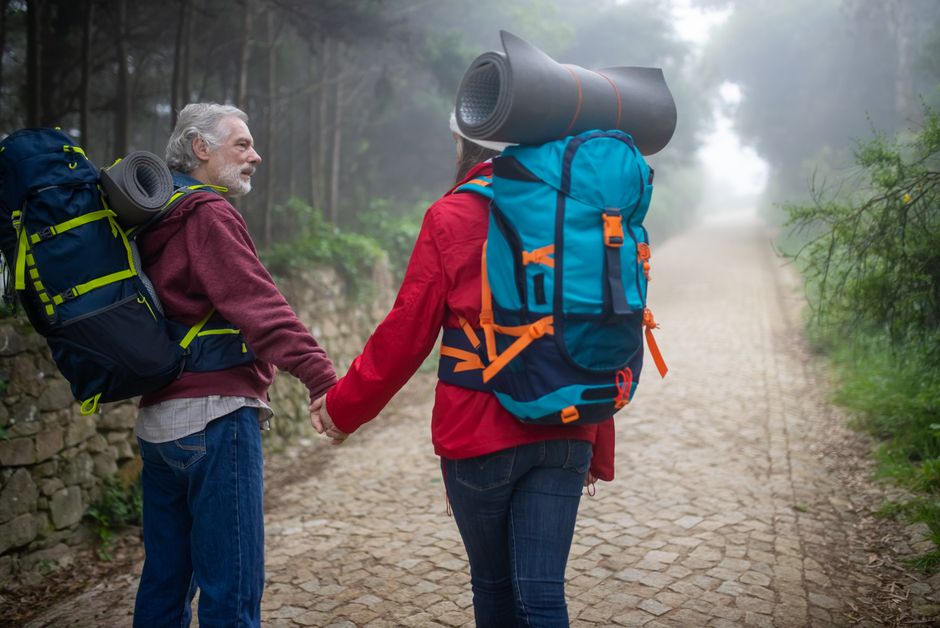
Here is the thing nobody tells you about travel backpacks: most of them carry like a sack of potatoes with straps. The Farpoint 40 is built on Osprey’s hiking pack heritage. The 2026 update (still current in 2026) fixed the old model’s biggest flaw — the laptop sleeve moved from the front to the back panel, and the harness got adjustable torso lengths. You can now get a proper fit whether you are 5’4″ or 6’2″. The hip belt actually transfers weight to your hips, which matters when you walk 2 km from a train station to a hostel in 35°C heat.
The Tortuga Pro 40L has a decent harness, but it is a city bag first. The shoulder straps are thick and padded, but the hip belt is less structured. Tortuga’s own marketing calls it a “travel backpack,” not a hiking pack. If your travel involves any actual walking — and for digital nomads in places like Medellín, Chiang Mai, or Lisbon, it does — the Farpoint carries better. Period.
One failure mode with the Farpoint: the stowable hip belt is great for stowing, but the zippered cover adds bulk. Some users find the belt digs in if you are very slim. Try it on before buying if possible. REI carries it in store.
The Laptop Problem: Where Tortuga’s Philosophy Shines
Digital nomads live on laptops. The old Setout had a dedicated rear laptop compartment that opened flat for TSA-friendly access. You could pull out a MacBook Pro 14 without opening the main clamshell. The Farpoint 40 now has a side-access laptop sleeve against the back panel. It works, but it is not as clean. You unzip a side zipper, slide the laptop out, and reverse the process. It is fine for security lines, but not as convenient for working in a café when you need to grab the laptop quickly.
The Tortuga Pro 40L keeps the rear-access laptop compartment, now with a false bottom and a dedicated tablet sleeve. It is the better design for someone who works on the go. But you pay for it in weight and price. If your laptop is a 16-inch MacBook Pro, both bags fit it, but the Farpoint’s sleeve is tighter. The Tortuga Pro has more padding and a better false bottom.
My take: If you travel with a laptop and work from cafés daily, the Tortuga Pro’s rear laptop access is worth the extra $165. If you mostly work from your accommodation and only need the laptop out at security, the Farpoint’s side access is sufficient.
Organization: Suitcase-Style vs Panel-Loading

The fundamental difference between these two bags is how you pack them. The Farpoint 40 is a panel loader: the main compartment opens like a suitcase (clamshell), but the interior is one big bucket with two compression straps and a mesh pocket on the flap. You use packing cubes. You must use packing cubes. Without them, the Farpoint is a black hole.
The Tortuga Pro 40L has more built-in organization: a front admin panel with pockets for chargers, cables, a passport, pens, and a zippered mesh pocket. The main compartment still works with packing cubes, but you can get away without them for shorter trips. The old Setout had a similar admin panel, which is why people loved it for city travel.
Here is a concrete packing list for the Farpoint 40 using cubes:
- Peak Design Packing Cube Medium ($45) — 5 t-shirts, 1 long-sleeve, 1 pair of pants
- Eagle Creek Pack-It Isolate Small ($25) — 4 pairs of underwear, 4 pairs of socks, 1 swimsuit
- Osprey Ultralight Garment Folder ($35) — 2 button-down shirts, 1 pair of chinos
- Toiletry kit: Sea to Summit Travelling Light Hanging Toiletry Bag ($35)
- Tech pouch: Bellroy Tech Kit ($59) — chargers, cables, power bank
That setup leaves room for a pair of sandals and a light jacket in the main compartment. The Farpoint’s compression straps cinch everything down so the bag stays carry-on depth.
When Not to Buy Either Bag
Both bags are 40L. That is the maximum carry-on size, but it is also heavy when full. If you are a weekend traveler or someone who hates checking bags and never travels for more than 5 days, a 40L bag is overkill. Get the Cotopaxi Allpa 28L ($200) or the Patagonia Mini MLC 30L ($199). Both fit under seats on most airlines and force you to pack lighter.
If you are a photographer carrying a full-frame camera, two lenses, and a drone, neither the Farpoint nor the Tortuga Pro has a dedicated camera cube system. The Peak Design Travel Backpack 45L ($300) integrates with Peak Design camera cubes and has side access to a camera. It is heavier and less comfortable than the Farpoint, but it is the right tool for photographers.
If you are traveling through Southeast Asia with 7 kg weight limits, the Farpoint’s 3.2 lbs eats into your allowance. The Osprey Daylite 26+6 ($110) weighs 1.8 lbs and expands from 26L to 32L. You lose the hip belt and frame, but you gain 1.4 lbs of packing weight. That is the tradeoff.
And if you are not a digital nomad at all — just a vacation traveler who rolls a suitcase through airports — buy a rolling carry-on. The Travelpro Maxlite 5 International Carry-On Spinner ($145) weighs 5.4 lbs and has wheels. No backpack harness can beat wheels on smooth airport floors. But wheels fail on cobblestones, dirt roads, and stairs. That is why nomads choose backpacks.
Final Verdict and Quick Comparison

For most digital nomads in 2026, the Osprey Farpoint 40 is the better buy. It costs $165 less than the Tortuga Pro, weighs 1.3 lbs less, carries better on your back, and has Osprey’s lifetime warranty (the All Mighty Guarantee). The laptop access is less convenient, but that is a minor tradeoff for the price and comfort advantages.
Buy the Tortuga Travel Backpack Pro 40L instead if: you work from cafés daily and need quick laptop access, you prefer built-in organization over packing cubes, and you do not mind the extra weight and cost.
Do not buy the old Tortuga Setout in 2026. It is discontinued, used units are overpriced, and the Farpoint’s 2026 update fixed the laptop placement issue that made the Setout appealing in the first place.
- Best overall for nomads: Osprey Farpoint 40 ($185) — lighter, cheaper, better harness
- Best for laptop-first workers: Tortuga Travel Backpack Pro 40L ($350) — rear laptop access, better organization
- Best for strict budget airlines: Osprey Daylite 26+6 ($110) — 1.8 lbs, expands to 32L
- Best for photographers: Peak Design Travel Backpack 45L ($300) — camera cube system, side access
- Best for non-nomads: Travelpro Maxlite 5 Spinner ($145) — wheels beat straps on smooth floors
Try the Farpoint on in person if you can. The adjustable torso length matters, and a bag that fits your back is worth more than any feature list. If you cannot try it, order from a retailer with free returns. REI, Backcountry, and Osprey’s own site all offer free returns in the US.
