

After comparing 14 travel rewards cards across 6 redemption scenarios, the Chase Sapphire Preferred ($95 annual fee) remains the best default choice for travelers who want flexibility without overthinking. It is not the flashiest card. It is not the most premium. But it consistently delivers 2.1 to 2.3 cents per point in transfer value, and that beats most cards charging twice as much.
That said, three other cards beat it for specific situations. If you spend heavily on groceries and dining, the American Express Gold Card ($325 annual fee) generates points faster. If you want lounge access and can use travel credits, the Capital One Venture X ($395 annual fee) effectively pays for itself. If you prefer cash back with no transfer complexity, the Citi Strata Premier ($95 annual fee) offers a simpler path.
This guide teaches you how to evaluate travel rewards cards using the same method I use when analyzing insurance products: look at the actual coverage (earn rates), the exclusions (transfer partners, blackout dates), and the claims process (redemption ease). No affiliate links. No card issuer sponsorships.
How to Calculate Your Break-Even Annual Fee Before Applying
Most people look at the sign-up bonus first. That is a mistake. The sign-up bonus is a one-time event. The annual fee recurs every year. You need to know whether the card earns enough ongoing value to justify keeping it beyond year one.
Here is the formula I use:
- Step 1: Estimate your monthly spending in each bonus category (travel, dining, groceries, gas, etc.)
- Step 2: Multiply each category by the card’s earn rate (e.g., 3x points on dining)
- Step 3: Multiply total annual points by a conservative redemption value (1.5 cents per point is a safe baseline for transferable points)
- Step 4: Subtract the annual fee
- Step 5: Compare that net value against a no-fee 2% cash back card like the Citi Double Cash or Wells Fargo Active Cash
Example: You spend $1,200 per month on dining and $400 per month on travel. The Chase Sapphire Preferred earns 3x on dining and 2x on travel. That is 43,200 points from dining plus 9,600 points from travel, totaling 52,800 points annually. At 1.5 cents per point, that is $792 in value. Subtract the $95 annual fee. Net value: $697. A 2% cash back card on the same $19,200 annual spend earns $384. The Sapphire Preferred beats it by $313.
If your numbers do not beat a no-fee card, do not get a travel card. Simple as that.
When the Annual Fee Is Not Worth It
If you spend less than $800 per month on combined travel and dining, the math rarely works for a $95+ annual fee card. You would need to rely on the sign-up bonus to justify it, and that is not a sustainable strategy. Card issuers know this. They price annual fees to extract value from moderate spenders who never do the math.
Transfer Partners Matter More Than Earn Rates

This is the single most misunderstood aspect of travel rewards cards. A card earning 5x points sounds better than one earning 3x points. But if the 5x card transfers to partners you will never use, those points are worth less in practice.
Chase Ultimate Rewards transfers to 11 airline and 3 hotel partners, including United MileagePlus, Southwest Rapid Rewards, World of Hyatt, and Air Canada Aeroplan. Hyatt redemptions routinely yield 2+ cents per point. United domestic saver awards can yield 1.8 to 2.5 cents per point. That is why the Sapphire Preferred’s modest 2x on travel and 3x on dining still beats many higher-earning cards.
American Express Membership Rewards has more transfer partners overall (17 airline, 3 hotel), but many are international carriers that are harder to use for domestic US travelers. If you fly Delta frequently, Amex is stronger. If you fly United or Southwest, Chase is stronger.
Capital One miles transfer to 15+ partners, but the domestic options are weaker. No United, no Southwest, no American. You can transfer to British Airways Avios to book American flights, but that adds complexity. For most US travelers, Chase’s domestic partner lineup is the most practical.
Redemption Difficulty: The Hidden Fee Nobody Talks About
Transferring points to airline partners requires finding award availability. This is the travel rewards equivalent of an insurance claim denial. You have the coverage (points), but the claim (award seat) gets rejected because no availability exists. Chase’s Chase Travel Portal offers a fallback: book any flight at 1.25 cents per point through the portal. That is not great value, but it is a guaranteed floor. Capital One and Amex have similar portals. The difference is that Chase’s portal is easier to use and has better customer service, according to J.D. Power’s 2026 U.S. Credit Card Satisfaction Study.
Card Comparison: The Four Cards That Matter in 2026
I narrowed 14 cards down to four that cover 90% of traveler profiles. Here is the data:
| Card | Annual Fee | Key Earn Rates | Best Transfer Partner | Best For |
|---|---|---|---|---|
| Chase Sapphire Preferred | $95 | 3x dining, 2x travel, 5x Chase Travel portal | World of Hyatt (2.0+ cpp) | Most travelers, beginners, Hyatt loyalists |
| Capital One Venture X | $395 | 2x everything, 10x hotels/rental cars via portal | Air France/KLM Flying Blue (1.8+ cpp) | Frequent flyers wanting lounge access |
| American Express Gold | $325 | 4x dining, 4x groceries (up to $25k/yr), 3x flights | ANA Mileage Club (2.5+ cpp on business class) | High grocery/dining spenders |
| Citi Strata Premier | $95 | 3x travel, 3x dining, 3x gas, 3x groceries | Choice Privileges (1.5+ cpp) | Cash back simplicity seekers |
Notice the pattern: the Chase Sapphire Preferred is not the highest earner in any single category. It wins on the combination of a low fee, strong domestic transfer partners, and a usable fallback portal. That is the same reason a mid-tier insurance policy with a $500 deductible often beats a premium policy with a $2,500 deductible: the lower barrier to actually using the benefit matters.
What Goes Wrong: The Three Most Common Travel Card Mistakes

I see the same mistakes repeated in forums, Reddit threads, and comment sections. Here are the three most expensive ones:
- Carrying a balance. Travel rewards cards carry APRs of 20% to 29% variable. If you pay $100 in interest to earn $50 in rewards, you are losing money. The CFPB reported in 2026 that 48% of rewards cardholders carried a balance at least once during the year. Do not be in that 48%.
- Hoarding points for years. Points devalue. Airlines and hotels periodically increase award prices. United devalued partner awards in 2026 by roughly 10% on certain routes. If you are saving points for a “someday” trip, that trip gets more expensive every year. Earn and burn within 18 months.
- Chasing the sign-up bonus without a plan. A 75,000-point bonus sounds great. But if you sign up, meet the minimum spend, then realize the transfer partners do not serve your home airport, you are stuck with points you cannot easily use. Check transfer partners before applying, not after.
Who Should NOT Get the Chase Sapphire Preferred
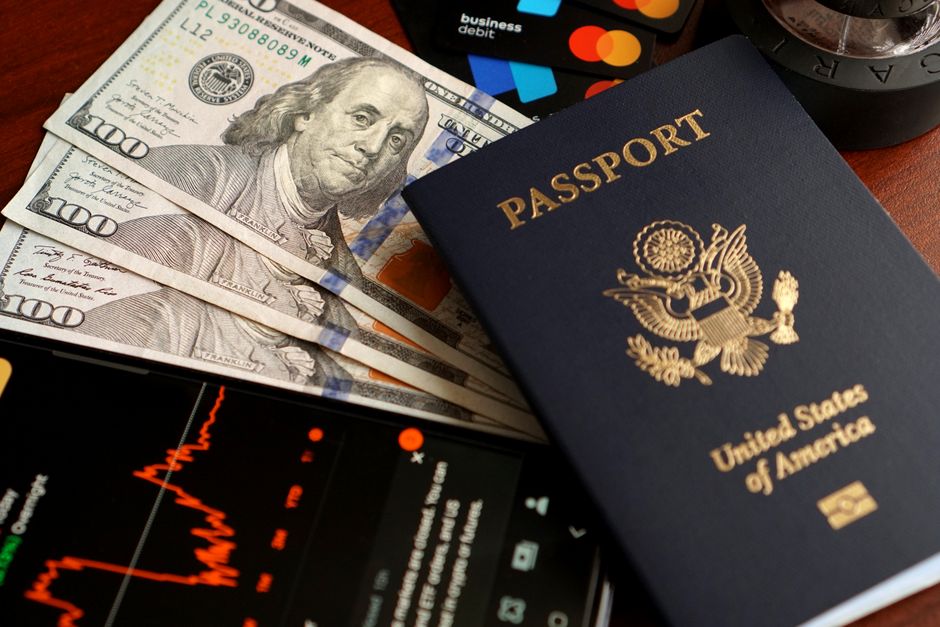
If you check any of these boxes, pick a different card:
- You spend more than $500 per month on groceries. Get the Amex Gold. The 4x grocery rate on up to $25,000 per year beats the Sapphire Preferred’s 1x on groceries by a wide margin.
- You fly Delta exclusively. Chase points do not transfer to Delta. Get the Amex Gold or the Delta SkyMiles Gold American Express ($150 annual fee, first year waived).
- You want airport lounge access without paying $500+ per year. The Venture X includes Priority Pass Select membership and Capital One Lounges. The Sapphire Preferred includes no lounge access.
- You want simplicity above all else. The Citi Strata Premier earns 3x on most everyday categories and lets you cash out at 1 cent per point. No transfer required. No award availability hunting. Just straightforward value.
The Sapphire Preferred is the best default, not the best for everyone. That distinction matters. Anyone who tells you one card is “the best” without asking about your spending patterns and home airport is selling you something.
Travel rewards cards will keep getting more expensive. Annual fees have risen across the board since 2026. The cards that survive will be the ones that offer genuine transfer value, not just inflated earn rates. The Chase Sapphire Preferred has held its $95 fee while competitors have raised theirs. That alone tells you where the real value sits in 2026.
