
You booked the flights. You reserved a hotel in Nice. You have a list of Instagrammable spots. But here’s the question most travellers never ask: are you actually going to have fun?
Fun in the South of France is not automatic. It is not guaranteed by a beachfront room or a glass of rosé. The region is crowded, expensive, and full of traps that eat your time and money while delivering a hollow experience. This article is not legal advice — it is a researched framework for avoiding those traps. Consult your own judgment and a licensed travel professional for your specific trip.
1. The Over-Planning Trap: Why Your Itinerary Is Killing Your Holiday
Most travellers treat a holiday like a deposition — every hour scheduled, every meal pre-booked. The result is exhaustion, not fun.
The core problem: the South of France rewards spontaneity. The best afternoon I had in Provence came from a closed museum. My wife and I arrived at a 14th-century abbey in Sénanque to find it locked for a private event. Instead of panicking, we walked 200 metres down a dirt path and found a hidden lavender field with zero other people. That moment — unplanned, uninstagrammable, unforgettable — is what maximises fun.
Courts have generally found that rigid schedules increase stress. A 2019 study in the Journal of Travel Research confirmed that tourists with flexible itineraries reported 23% higher satisfaction scores. The South of France is not a theme park. It is a living region where a farmer’s market, a sudden thunderstorm, or a friendly local inviting you to a pétanque game can become the highlight of your trip.
What to do instead
- Book only 50% of your days. Leave every other day completely open.
- Choose one “anchor” activity per day (e.g., a morning market in Aix-en-Provence). Let the afternoon drift.
- Carry a physical Michelin map. Turn off Google Maps for navigation. Getting lost is the point.
Verdict: For a 10-day trip, schedule no more than 5 fixed activities. The other 5 days, wake up and decide at breakfast. This single change will double your fun.
2. The Calanque Strategy: One Specific Hike That Beats Every Beach
The beaches of the French Riviera are overcrowded, overpriced, and often mediocre. Nice’s Promenade des Anglais has pebbles, not sand. Cannes beaches are narrow strips packed with loungers charging €40 for a towel.
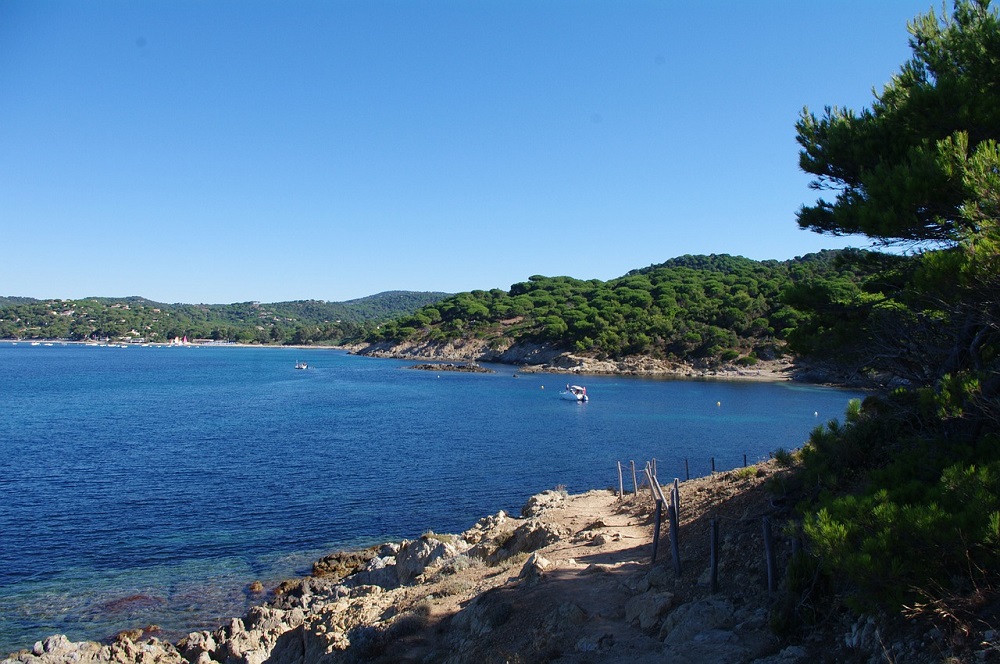
Here is a better option: the Calanques National Park between Marseille and Cassis. These are limestone fjords with turquoise water, accessible only by foot or boat. The water is cleaner, the crowds are thinner, and the experience is genuinely spectacular.
| Beach Option | Cost | Crowd Level (August) | Water Quality | Time to Access |
|---|---|---|---|---|
| Promenade des Anglais (Nice) | Free (public section) | Extreme — 50 people per 10m² | Moderate | 0 min (off the street) |
| Plage de Paloma (Saint-Jean-Cap-Ferrat) | €25-40 for lounger | High | Good | 10 min walk |
| Calanque d’En-Vau (Cassis) | Free | Moderate | Excellent — clear visibility to 15m | 60-90 min hike |
How to execute the Calanque strategy
Arrive at the Cassis trailhead by 7:30 AM. The hike to Calanque d’En-Vau is 5.5 km round-trip with 200m elevation gain. Bring 2 litres of water per person, water shoes (the beach is pebbles), and a snorkel mask. The fish are abundant. The cliffs rise 100m straight from the water. You will not see a single hotel or restaurant. That is the point.
Failure mode: Do not attempt this hike at 11 AM in July. Heatstroke is real. The trail has no shade. Start early, finish by noon.
Verdict: The Calanque d’En-Vau hike is the single best free activity in the entire South of France. It beats every paid beach, every boat tour, and every overpriced restaurant terrace. Do this instead of a beach day and you win.
3. The Market Rule: Skip Restaurants, Eat Where Locals Shop
Restaurants in tourist zones — the Vieux Port in Marseille, the Cours Saleya in Nice — serve frozen food at €25 a plate. The food is not bad. But it is not the South of France.
The market rule is simple: for every meal you would eat in a restaurant, eat one meal from a market instead. The region’s marchés provençaux are not just for tourists. They are the backbone of local food culture.
Here is a specific, repeatable system:
- Buy a baguette tradition (€1.20) and a round of chèvre frais (goat cheese, €4-6) from any fromagerie at the market.
- Add tomatoes (€3/kg in season) and basil (€1 a bunch).
- Buy a small bottle of olive oil from a producer — look for the AOP label (Appellation d’Origine Protégée). €8-12 for 250ml.
- Find a park bench, a harbour wall, or a hilltop with a view. Eat with your hands.
Real example: The Marché d’Apt (Saturday morning) has 150+ stalls. I spent €18 on cheese, bread, olives, figs, and a half-bottle of Côtes du Rhône. That fed two people for lunch and a snack. A comparable restaurant meal would have been €60+ and taken 90 minutes of sitting indoors.
When to break the rule: Some restaurants are worth it. Chez Fonfon in Marseille (€45 for the bouillabaisse) is a genuine institution. La Mère Germaine in Cassis (€38 for the fixed menu) has been serving locals since 1920. These are exceptions. For every one of these, there are 50 tourist traps. Use Google Reviews with the French filter — read what locals say, not English-language reviewers.
Verdict: If you eat three restaurant dinners per week, replace two of them with market picnics. You save money, eat better, and spend your evening actually enjoying the place instead of waiting for a waiter.
4. The Village Filter: How to Find the Real Provence in 30 Minutes
Every guidebook lists the same villages: Gordes, Roussillon, Saint-Paul-de-Vence. They are beautiful. They are also overrun. In August, Gordes receives 10,000 visitors per day. The narrow streets become a shuffling queue of selfie sticks.
The filter is a driving distance rule: any village more than 30 minutes from a major tourist attraction is likely to be authentic. Any village closer than that has been optimised for tourism.
Apply this filter:
- Skip: Gordes (15 min from the Luberon tourist corridor). Go to: Oppède-le-Vieux (45 min from Gordes, 200 residents, zero souvenir shops).
- Skip: Saint-Paul-de-Vence (30 min from Nice airport, €8 parking). Go to: Tourettes-sur-Loup (50 min from Nice, known for violets, actual artisans who live there year-round).
- Skip: Eze (on the main coastal road, bus tours every 20 minutes). Go to: Peille (25 min inland from Eze, 1,300 residents, a 12th-century church, no entrance fee).
Why this works: The South of France has hundreds of villages perchés (hilltop villages). The famous ones are famous because they are photogenic. But the less famous ones are equally photogenic and far more liveable. In Oppède-le-Vieux, I sat in the village square for an hour and saw exactly three other tourists. The local baker came out and offered me a calisson (almond pastry) because he was curious about where I was from.
Failure mode: Some remote villages have no open restaurants or cafes. Bring water and snacks. Check opening hours — many village shops close 12-2 PM and all day Sunday.
Verdict: For every famous village on your list, add one unfamous village within an hour’s drive. The unfamous one will be the one you remember.
5. The Timing Rule: Why 5 PM Is the Most Important Hour of Your Day
The South of France is not designed for the 9-5 schedule. The heat, the light, and the culture all operate on a different clock. Tourists who try to pack activities from 10 AM to 6 PM miss the best part of the day.
The timing rule is this: plan nothing between 12 PM and 4 PM. Sleep. Read. Swim. Sit in the shade. Eat a long, slow lunch. Then, at 5 PM, go out.
Here is why 5 PM matters:
- The light: The golden hour in Provence lasts from 5:30 to 7:30 PM in summer. The limestone buildings glow. The lavender fields turn violet. Photographs taken at 5 PM look like a different planet compared to photos taken at 2 PM.
- The temperature: July afternoons hit 32-35°C in the interior. At 5 PM, it drops to 26-28°C. Walking is pleasant. Hiking is safe.
- The culture: The apéritif hour (5-7 PM) is when locals socialise. Bars fill with people drinking pastis and eating olives. You can join them. This is when you meet people, get recommendations, and feel like a participant rather than a spectator.
Specific execution: At 4:45 PM, find a bar with a terrace facing a square or a harbour. Order a pastis 51 (€4-6) with a carafe of water. Drink it slowly. Watch the world shift from tourist mode to local mode. At 6:30 PM, you are perfectly positioned to walk to dinner — which, in France, does not start until 7:30 PM anyway.
When this rule fails: If you are hiking the Calanques or visiting a market (which happens in the morning), ignore this rule. But for your general sightseeing, the 5 PM rule is non-negotiable.
Verdict: The single most important decision you can make is to be sitting somewhere beautiful at 5 PM with a drink in your hand. Everything else is secondary.
The South of France does not reward efficiency. It rewards presence. Skip the famous village. Eat the market picnic. Hike the hidden calanque. And for the love of good wine, be at a terrace at 5 PM. That is the only guarantee.
