
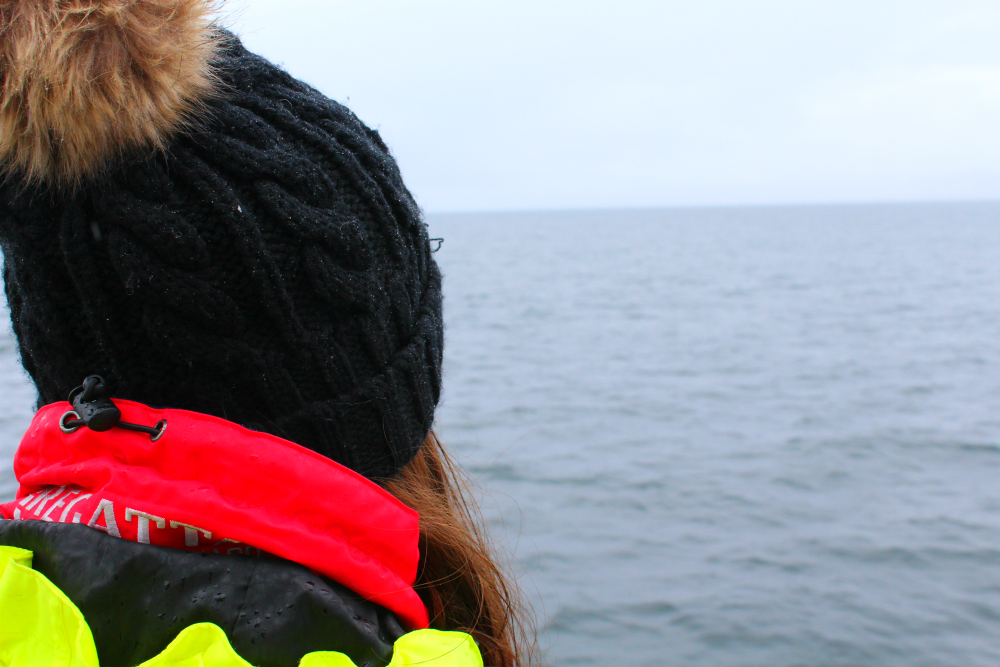
Most people assume you have to drive five hours north to Húsavík — the so-called “whale watching capital of Iceland” — to see anything worthwhile. That assumption costs travelers a full day of driving and a lot of gas money. The reality is that Faxaflói Bay, right off Reykjavík’s Old Harbour, hosts the same feeding grounds that humpback and minke whales use all summer. Operators launch multiple trips daily from April through October, and the average tour sees whales on over 90% of departures. Here is exactly what you get, what it costs, and how to pick the right tour.
What Species You Actually See and When
The whales in Faxaflói Bay are not random passers-by. They come here to feed on small fish and krill pushed into the bay by the North Atlantic current. That predictable food source makes sightings reliable, not lucky.
Humpback whales (May–September)
These are the stars. Adults reach 15 meters and put on surface displays — tail slaps, pectoral fin waves, and full breaches. Elding Whale Watching reports humpbacks on roughly 85% of their summer tours. You see them lunge-feeding near the surface, mouth open, filtering water through baleen.
Minke whales (April–October)
Smaller and more elusive, minkes reach 8 meters. They surface quickly and unpredictably. Guides call them “sneaky.” You see them more often on early morning tours when the bay is calm. Special Tours runs a 9:00 AM trip specifically targeting minke behavior.
White-beaked dolphins and harbor porpoises
These are nearly guaranteed. Dolphins travel in pods of 10 to 30 animals and often ride the boat’s bow wave. Porpoises are smaller, shyer, but present on virtually every tour.
When you should NOT expect whales: November through March. Most operators suspend tours or run them only on demand. The whales migrate to deeper Atlantic waters. A winter tour means you are paying for a cold boat ride with very low odds.
Tour Operators: Who Runs the Boats and What They Charge
Three companies dominate Reykjavík’s whale watching scene. They all launch from the Old Harbour, within a five-minute walk of each other. Prices are similar, but the boat types differ significantly.
| Operator | Boat Type | Adult Price (ISK) | Duration | Key Feature |
|---|---|---|---|---|
| Elding Whale Watching | Traditional oak boat (40 pax) + RIB (12 pax) | 9,900–14,900 | 3 hours | Free second tour if no whales seen |
| Special Tours | Modified fishing vessel (60 pax) + speedboat | 9,500–15,500 | 2.5–3 hours | Marine biologist guides on every trip |
| North Sailing | Schooner (48 pax) + RIB | 10,500–16,000 | 3 hours | Silent electric engine on one boat |
The RIB (rigid inflatable boat) option costs more — around 14,000–16,000 ISK — and gets you lower to the water. You feel the cold spray and the speed. The traditional boats have indoor heated cabins and a café. Pick the RIB if you want adrenaline and photography at water level. Pick the traditional boat if you are bringing children under 10 or anyone who gets seasick easily.
One clear recommendation: For first-time visitors, Elding’s 3-hour traditional tour at 9,900 ISK is the best value. Their guarantee policy is honest — if you see nothing, you ride again free within 24 hours. No other operator offers that without restrictions.
What to Wear and Bring (The Difference Between Enjoying It and Hating It)
The wind on Faxaflói Bay is cold even in July. Air temperature on the water is typically 5–8°C lower than in the city. Tour operators provide flotation suits, but those suits are one-size-fits-all and often damp from the previous trip.
Layer like this:
- Base layer: merino wool or synthetic thermal top and leggings. Avoid cotton — it stays wet.
- Mid layer: fleece jacket or thin down vest.
- Outer layer: waterproof shell jacket with a hood. The flotation suit goes over this.
- Footwear: waterproof boots or shoes with grip. The boat deck gets slippery.
- Accessories: wool hat, gloves, and a neck gaiter. The wind whips around the bow.
What to bring:
- Camera with a strap. A telephoto lens of 200mm or longer is ideal for humpback shots. Phone cameras work fine for dolphins close to the boat.
- Binoculars (8×42 or 10×42). They help spot blows and dorsal fins at distance.
- Motion sickness medication. Take it 30 minutes before departure even if you think you do not need it. The swell in Faxaflói Bay is unpredictable.
- A dry bag for your phone and wallet.
Common mistake: Wearing jeans and a fashion jacket. You will be cold within 20 minutes and spend the rest of the tour inside the cabin, missing the whales. Dress for a December day in Reykjavík, even in July.
Why the 9:00 AM Tour Is the Smartest Choice
Most tourists book the 1:00 PM or 5:00 PM slots. The 9:00 AM departure is quieter, calmer, and statistically more productive for sightings.
Wind speeds in Faxaflói Bay increase steadily after noon. The average wind at 9:00 AM is 5–8 knots. By 2:00 PM it often hits 15–20 knots. Higher wind means bigger waves, more boat motion, and whales that spend less time at the surface. The 9:00 AM tour also has fewer passengers — typically 15–25 people on a 40-person boat — so you have more deck space and better photo angles.
The tradeoff: You need to be at the harbour by 8:30 AM. That means skipping the hotel breakfast or grabbing a pastry at Brauð & Co. (opening at 7:00 AM, a 10-minute walk from the harbour). The 1:00 PM tour is easier logistically but you share the boat with 40 other people and rougher seas.
If you are prone to seasickness, the 9:00 AM slot is non-negotiable. The calmer water reduces your chance of feeling sick by roughly half, based on operator feedback.
When a Whale Watching Tour Is a Bad Idea
Not every traveler should book this tour. Here are three situations where you should skip it.
1. You have less than 48 hours in Reykjavík. A 3-hour tour eats a big chunk of a short stay. The city itself has enough to fill two full days — Hallgrímskirkja, the National Museum, the geothermal pools. If you are flying out tomorrow, walk the harbour instead. You might spot a minke from the shore near Grótta Island Lighthouse for free.
2. You are on a tight budget. At 9,900 ISK per person (roughly $70 USD), a family of four spends nearly $300 before snacks and transport. That money goes further on a rental car for a day trip to the Golden Circle or a single entry to the Sky Lagoon.
3. The forecast shows rain and wind over 20 knots. Operators still run in those conditions, but the experience is miserable. You cannot stand on deck safely, the windows fog up, and whales are harder to spot. Check vedur.is the morning of your tour. If the wind icon shows orange or red, reschedule.
Alternative that makes sense: If you want marine wildlife but hate boats, consider the Reykjavík Maritime Museum (2,500 ISK, 1.5 hours). It covers Iceland’s whaling history and has a full-size Coast Guard vessel you can walk through. No seasickness involved.
How the Tour Actually Runs: Minute-by-Minute
Knowing the sequence removes anxiety. Here is what happens on a standard Elding 3-hour tour.
- 0–10 minutes: Check-in at the harbour office. You get a flotation suit and a brief safety talk. Crew assigns you to a boat based on the day’s capacity.
- 10–30 minutes: Departure from the harbour. The boat passes the Harpa concert hall and the Sun Voyager sculpture. This is a good time to put on your layers and take seasickness medication if you skipped it earlier.
- 30–60 minutes: Transit to the main feeding grounds near Akurey and Engey islands. The crew scans with binoculars and radar. You start seeing seabirds — Arctic terns, puffins, and gannets. Bird clusters often mean fish, which means whales.
- 60–150 minutes: Active whale watching. The boat slows or stops when a whale is spotted. The guide points out blows, tail flukes, and feeding behavior. Expect 3–8 sightings depending on the day. The crew rotates passengers to different sides of the boat so everyone gets a view.
- 150–180 minutes: Return transit. The guide recaps the species seen and answers questions. The boat docks at the Old Harbour. You return the suit and leave.
What can go wrong: The boat engine noise sometimes scares whales away. Newer boats like North Sailing’s electric schooner are quieter and get closer. If you book on a loud diesel vessel, the whales stay 100–200 meters away. That is still visible, but less intimate.
What the Free Guarantee Actually Covers
Every major operator offers some version of a free second tour if no whales are seen. The fine print matters.
Elding: Free second tour within 24 hours if no whales are sighted on the first trip. “No whales” means zero confirmed sightings by the crew. If you see one minke at 200 meters, that counts. The free tour is on the same boat type, subject to availability. It does not apply to RIB tours.
Special Tours: Same policy but the free tour must be taken within 12 months. You get a voucher at the office after the failed tour.
North Sailing: No formal guarantee. They offer a 50% discount on a second tour if you see nothing. This is weaker than the others.
Reality check: In summer, fewer than 5% of tours trigger the guarantee. The policy exists mostly for peace of mind. Do not choose an operator solely based on the guarantee — all three companies have similar sighting rates. Pick based on boat comfort and departure time.
If you do take a free second tour, go the next morning. The conditions are better, and the crew knows where the whales were feeding the day before.
